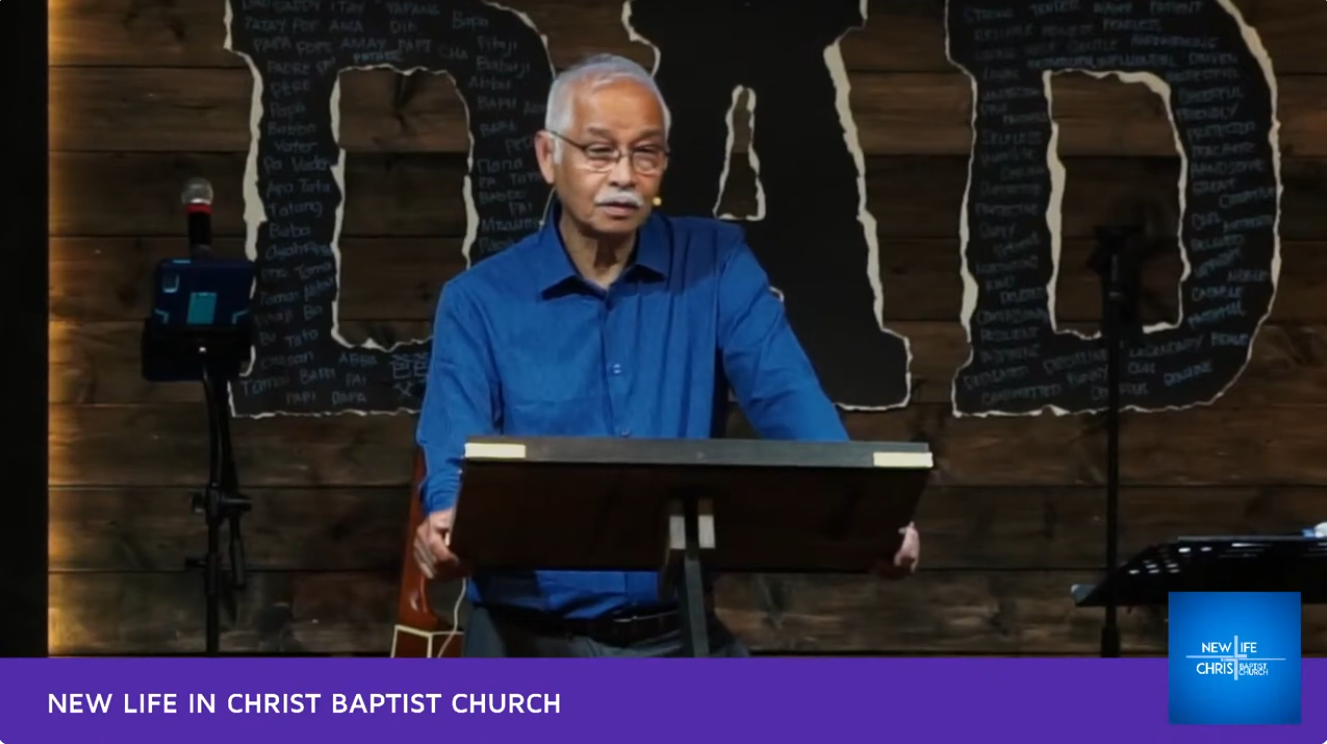
Fear the Lord: Fearing God with Delightful Fear
Bro. Juan Luna ·
2026-06-28
Genesis 3:1-10
Who is your lord? Who do you fear? What do you fear? And who will save you? If you have made the decision to accept Christ as your savior, then you would not have the dreadful fear, but a delightful fear. A delightful fear by obeying him, by trusting in him, trusting in him in everything.
Watch Sermon
Message Notes
The last time I spoke, somebody commented that Kuya your message the message that you talked about is scary. So now you can see the code on the screen. It just makes sense that we should know who God is and what God is. And yes I do admit that uh the last message was expressing the metaphor God is a consuming fire. Although I find it a positive reaction, not because I like to scare you, scare people, but that's what God is. Our God is a God who is both loving and just. God is love and just at the same time. No love without justice and there is no justice without love.So our message today again in keeping with the theme of what God is, His character and his nature. Again it is from the consuming fire to fear.
So in our in our focus text today, you would notice two the two words in this text, fear and rejoice. And they do not seem to complement but contradicts each other, right? Happily trembling, right? But that happens when it's an extreme happiness. But it's coming from fear. Paul used this in Philippians 2:12-13. Therefore, my beloved, as you have always obeyed, so now, not only as in my presence, but much more in my absence. Work out your own salvation with fear and trembling. He repeated it. So, from the Old Testament to the New Testament, We read fear and trembling. We fear rejoice with trembling. So it's contradictory, right? But there are two kinds of contradiction. A true contradiction is what it is. It is a true and real contradiction. While a seeming contradiction is when a contradiction is perceived as a true contradiction in its surface meaning when you first read it you first think about it, it does seem contradictory right because it's in just one in one breath you read this verse that uh serving the Lord with fear and rejoice with trembling. So but today we will focus our attention today on the word fear. We will look at the word and how the Christian understands and reacts to fear. What the Bible says about fear and the solution to fear.
So fear, fear the Lord. It's a command. And again, you're saying, "Oh, it's scary. It is doesn't sound good, right?" But then again, what we're going to explore today and learn today is to fear God with a delightful fear.
So how can fear be delightful? How can that be? A fear that gives delight, fear that makes you happy. Let us explore it today. What we will do is what we will learn is what is the delightful fear or happy fear? Who possess that happy fear? What and who gives delightful fear?
What then is fear?
Everybody knows this. Everybody experience this because it's a very strong emotion. It is a reaction to circumstances to conditions or it is a reaction to another being.
Fundamentally it's an inherited and acquired emotion from Adam and Eve. As we have read from our scripture reading today, Adam and Eve is our first parents. In Genesis 3 1-10, we see the cause of their fear. After they disobeyed God, Adam and Eve hid from God before because they fear him. The story in Genesis tells us of the very first experience of fear was the result of disobedience, a transgression from the will of God. So the very first object of fear was the fear of God. Is God that they fear? It is God that we fear. Nevertheless, in our reading, we also see we it is the account of man's fall from the grace of God. And it tells us from the beginning of fear, the reason for fear and the object of fear.
Let me read it again. Because everybody fears because we are naturally fearful. Meaning we are born with it. Because in Genesis 3:8-10 and they heard the sound of the Lord walking in the garden in the cool of the day and the man and his wife hid themselves from the presence of the Lord God among the trees of the garden. But the Lord God called to the man and said to him, "Where are you?" And he said, "I heard the sound of you in the garden, and I was afraid because I was naked and I hid."
Adam and Eve feared God, their creator, when they obeyed another serpent or Satan.
Why is that important? Because Adam and Eve were given were they were sovereign over creatures, right? They Adam was asked by God to name the creatures, meaning they are the king and the queen of this earthly dominion. It is it is their domain. But in this case, Eve talked to to the serpent and she obeyed him and she believed him. So they the object of their fear was God. They feared God, but they did not fear the serpent, nor fear disobeying their creator.
Well, when they fear the consequences of their actions, they hid from God. Why? Because the attending result of transgressing God's command is guilt, corruption and punishment. Those are the effects of sin. That's why the very first our parents when they sin their nature became corrupted and also their minds and they have the guilt they have the guilt that that happened because of their disobedience. So the reaction is from guilt and punishment they hid. It makes sense to hid from God who is all knowing and is always there and how can you hid from his presence? Right?
So they must all they must have also feared God that they will be exterminated. Does God have the right to annihilate them? Does God have the right to destroy these creatures? Right? Did the lower creatures, the animals, were they the one who transgressed? They disobeyed? No. Their king and their queen, they disobey. So if God annihilated Adam and Eve, they're not going to be here, right? Only the animals. But would God be just to an annihilate them? Of course. Of course he is just. But he did not. So that's why we're here. And that's good, right? It's good. But again, we are naturally fearful because of what transpired in the garden and because of their disobedience. And we inherited fear. That's why we are naturally fearful. Now this is how the word loka is. What do we fear and what is fear? Fear is defined by psychologist as phobia. There are there is the agoraphobia meaning fear of open spaces, fear of snakes and etc. And what's their common solution? Common solution is by chemical means, by medication, by therapies, right? Where one can talk about their fears to a psychiatrist. So we fear the unknown also. We feel the consequences of our actions just like our just like Adam and Eve. And no matter how hard we try to forget or be in control of situations in our everyday life, the close of anxiety grips us. It's hard to escape from it. It's always in us. Guilt. Well, I know I would go over time if I enumerate the things that we fear.
So, I classified three fears for the sake of time. Fear is the fear of the past. We fear the things that we did, you know, in our past. We fear the consequences of our fast decisions. The words that are hurtful that we spoke to another being yesterday or maybe when you are still in the Philippines, you still have them. Do you still remember how you know like how you hurt this person or that's somebody who hurt you and you're scared of another people another person and what do people do with their guilt by alcohol shopping right especially oh should I say the women yes and uh by eating right gluttony or uh we uh we become great pretenders. We put up a face that is phony, you know, like we say, "Oh, I am this and I am that." And you know, our pride takes in and again that's something we regret. Those are the past things that happened in the past and still we fear them and we also the second one is we fear the present. We fear rejection. Right. We fear failure. We fear death as a clear and present danger because those are the two things that we cannot escape. And third is the fear of the future. We are anxious of what the future brings. The necessities of what we are going to eat, which restaurant are we going to go, right? We going to drink, we're going to wear. And we all are also anxious of even the non-necessities, our cars, right? Uh, should I have a new car? Right. We fear that. And when you watch the news, we fear AI robots taking over the world. In my generation, there's no uh mass media. this, you know, like uh we only listen to the radio for you know, like for horror stories, but now so in my generation, we fear vampires and all kinds of monsters, but today we are baffled by aliens, right? We are afraid of the different vaccines, viruses, and pandemics. And if you're going to be watching Netflix, zombie apocalypse, right? All after all those fear I mentioned, the last thing we fear is the fear of God. We don't fear God. And again because we are naturally fearful. Now according to the word I mean the best minds in the world we live in the philosophers the scientists and the talking heads in the media the politicians. The source of fear and anxiety is God. The source of fear is God ever since the beginning, right? So it's the same. So we're going to look at two very influential thinkers or philosophers in the 20th century because normally this these are the ones that are being taught to our children. So if you're in school and especially in the at the university you would come across this maybe but I hope you do and I hope you would also look at this too.
The first one is Friedrich Nietzsche and the famous remark the famous word from him is God is dead we killed him and the second is Bertrand Russell. He passed away in 1970 so it's still within our my generation I think and his work was The essay why I am not a Christian. Going back to Friedrich Nietzsche was a German philosopher who dealt with the problem of suffering. How to deal with suffering. And get this, this is really nice. He also came out with the idea of a superman to deal with suffering. You would pull your boots up and you know just bear and grain it and you will survive right. So lean on yourself and you'll be victorious over any suffering. So he had this idea of Übermensch. It's a German word for a superman and also the untere Übermensch is lower than the superman. Now what's the bad thing about this? Because Fred uh Friedrich Nietzsche philosophy was applied by his number one admirer, Adolf Hitler. Hitler applied the Übermensch the superman to the super race and his statement God is dead occurred in several of his work and it has became become his best known remarks. Now the second philosopher is Bertrand Russell and he's an English philosopher who wrote that essay why I am not a Christian. It is a good read. So if you could you know like read him I'm not saying that his ideas are right but it is better if you read it yourself. So I'm going to give you the his thesis. He believes Bertrand Russell he believes that the Christian faith use the fear of the unknown the mysteries and dependence on a made-up deity God that can help the ignorant. Russell is an avowed atheist and he questions the morality of the Christian faith and in his view the Christian faith is based on fear. Now his solution to fear is by our own will. So Friedrich Nietzsche by our own intelligence we can stand on our own two feet and banish ignorance of the fear of God. A God who is a God of our own construct. So he believes that God is a made-up God. We just invented him. That's why Nietzsche he sees God as since it's just a made-up God we can kill him just banish him from our thoughts you know Russell recommends that to counter the cruelty of religion he appeals to replace Christianity with science self-will to be good to one another and to create a of our own making.
And what do we say? They are so wrong. Because looking forward to what? Killing God and relying on our own effort, our human goodness and intelligence. Have we stopped killing each other? No. There are The first world war was called the war to end all wars. Did it end wars? It was followed by more wars. After two centuries from 19th to 20th century, what have we accomplished? The scientific experiment on the field of medicine brought to us more viruses, more vaccines and the science of the field of astronomy. They made us believe in aliens. Aliens that will save us from self-destruction, from diseases, and even from religion. Now there are more people with uh mental illness and we have more psychiatrists and psychologist to explain and cure crimes, drug addiction, drug use and alcoholism.
So we have become a more fearful society because we do not just hide or run away from God but we replace God with another God and made up God and idolatry in the Old Testament was man's creation in Isaiah 44. But you say that we are not idolatrous pagans in the Old Testament. We don't worship gods made of wood and stones. We have religion, right?
But our present day idolatry is our own family. Our idolatry is our material possessions. Our idolatry is our job, ourselves. We ignore God. We banished and removed God from our consciousness. So we have a dreadful fear. Why we do not fear God from our reading like Adam and Eve? Because we do not recognize God as Lord. God is a creator God and God is the Lord of all. And how did how did those two why did those why did Adam and Eve disobeyed God? Because they don't like the rule of God. They don't like they want autonomy. They want to be free from God just like in our reading. And as they believed in the lie of the serpent, we also believe the lies and delusion of the enemy in Genesis.
I'm saying this we because not saying the weed who are Christians but we who have gone also from fearing God, hating God, hiding from God, right? So the we is for us in our past if you're a Christian now and especially those who do not know God and another thing that we why we do not fear God is the zeitgeist the spirit of the times. We have a worldview that is devoid of God. without God. And if there's no God, they say that he's just on vacation that we are left on our own. We can do what is right in our own eyes because there is no fear of God in their own eyes as it as it is said in Romans 3:18.
Now the good thing is that there are two kinds of fear. Two kinds of fear is the dreadful fear and delightful fear. again the dreadful fear is you would say oh yeah that's consistent that's fear is of course it's the it's dreadful right but then delightful how can fear and be happy and be delightful right so we can now compare the two kinds of fear. There's a wicked on Proverbs 28:1, the wicked flee when no one pursues, but the righteous are bold as a lion. So it says it means here that it's just like in the garden you know Adam and Eve flee from the presence of God and the righteous is in Nehemiah 1:11a it reads that oh Lord let your ear be attentive to the prayer of your servant and to the prayers of servants who delight to fear your name. So this was written by Nehemiah the prophet and it means here that as a prophet he is righteous because he comes to God in prayer. He does not flee from God. Nehemiah prays and petitions God to be attentive to his prayer. So it means a relational communion between a creator and his creature. It is a relationship. That's why Christianity is a relationship. That's why a lot of people say, "Oh, I'm also a Christian." But do you have a relationship with God himself? Does he? Of course you say, "Yeah, I know him." But does he know you? That's the, you know, that's the other thing. That's the problem.
Now, how to fear God? Fear God by knowing God, right? And it says in uh Proverbs 3:7, "Be not wise in your own eyes. Fear the Lord and turn away from evil." So it is not trusting yourself, not trust when it comes to God. And you fear him and when you fear him, you turn away from evil. And the second Psalm 40:8 I delight to do your will. Oh my God your law is within my heart. So you fear God when you obey his direction, his law, his will and by knowing and cherishing God's law. And where is God's law? In the scriptures, right? And the third one is be thankful or to bless God. It's in Psalm 119:174. I long for your salvation, oh Lord, and your law is my delight. Okay. Says law. Does it mean to say the ten commandments? I have to follow the ten commandments and everything in Deuteronomy. Well, the law here is defined in Strong's concordance as direction and instruction. Of course, the law is also commonly known as the Mosaic law, which includes the ten commandments.
So in Nehemiah 111 delightful fear is first preceded by fear of his name. In knowing who and what God is, we fear God. It is fear out of respect. It's an acknowledgement of him as creator and sustainer. And we show obedience by doing his will in Psalm 48. I delight to do your will. So we show obedience by doing his will and delighting in the law. Again, it is not just the ten commandments but all his direction and all his instructions. Now, what are the benefits of fearing God for us? Right? Knowledge. Because in Proverbs 2:5, then you will understand the fear of the Lord and find the knowledge of God. When you read this word and you understand the fear of the Lord, you will find the knowledge of God. How do we find the knowledge of God? Read the Bible. Right? Read the Bible. And number two is wisdom. In Proverbs 8:13, the fear of the Lord is hatred of evil. Pride and arrogance of the way of evil and perverted speech I hate. The Lord hates evil and perverted speech. So we will gain wisdom when we fear God to flee from sin and happiness or being delightful. We become delightful in God's salvation. And it says in 2 Samuel 22:20, he brought me out into a broad place. He rescued me because he delighted in me. The believer, the true disciples, true sons and daughters delight in knowing and obeying the law of their heavenly father. Then how should we fear God? Filial fear. Now what is filial? It's a word that we don't always hear. We fear God with filial fear. Filial means family relationship. Those of you who who have heard the Latin version of in the name of the father, the son and of the holy spirit. how I how I miss also that it's In nomine Patris, et Filii, et Spiritus Sancti you know the son. A saying of God sinning is honoring the name of God. It is disrespecting his will for us. He wills us to be blessed, to be happy like him. The saying like father like son applies in this situation. If we belong to him, the heavenly father, we are created in his image and called us to be like him. The Christian true disciple that has the right knowledge of God fear God out of love. Example when our son was young wait he's here but uh I don't want to embarrass him or put him in the spot but I'm just going to do it anyway. Sorry Anak, forgive me. The story he did, the story was that he did something wrong in his kindergarten class. Imagine this kindergarten being called to the principal's office. Your day your son did something wrong. We want to talk to you. Well, you know, all children are cute. But yes, they're cute, but messy. Especially if you make give them the a jar of peanut butter, you know what's going to happen, right? Anyway, so the children, we don't have to teach them to lie. We have to teach them to be naughty because it comes naturally. It's just like our fear. Fear is natural being little is natural. Okay. And going back to the story, it was a revealing visit from the principal's office. When the mother and son got home, Anak said, uh, oh, sorry. Anak means son or even took to a daughter, right? in that's in Filipina. anak said, "I'm sorry, Mom. Please don't get upset with me." So, he did not fear the kurot. He did not feel the slippers that I'm going to throw at him or this or the smack on the head. Right. Oh, I just thought about this smack on the head because in Filipino we have our own way of saying it, right? We say what batok, batukan kita or batok right in English they don't have it. So our language is better than them. What's wrong with what's up with that? Right? So anyway, when he said that please don't get upset with me, he feared offending us. He did not fear punishment and he fear what he feels is he does not want to disappoint us for his bad behavior. As parents, we appreciate his concern when he said, "Don't get upset with me, Nanay. Don't get upset with me Tatay. So that is respect not out of fear but respect by acting to uphold the family honor. It is respect out of love. It is not the fear of punishment. Comparison, a prisoner and a prison guard. If the prison if the prisoner does something wrong, right, prison guard is going to met out punishment, right? And say, okay, one week in isolation, right? So that's the kind of relationship between the prisoner and the prison guard. No, it's a different fear between the son and the parents. That is filial fear.
Now, this is one thing that I really like when I stand here because I can really talk to you. We have little ones and I'm want to talk to you little ones. Do you feel fear afraid of mom and dad because of the punishment or you fear mom and dad not wanting to be a disappointment not upholding the family honor to the young man, young woman? I say that have a godly fear and your relationship with the family would be pleasing to God as we are commanded in Ephesians 6:1 and2 again it is a command from Ephesians 6:1 and 2 children obey your parents in the Lord for this is right honor your father and your mother. This is the first commandment with a promise. It is a command. It is not a suggestion. So parents, raise your children in the fear and admonition of the Lord. And again, one thing that parents and children should memorize this is in Colossians 3:20. If you're taking notes, children, obey your parents in everything, for this pleases the Lord. Fearing your parents is to be a filial fear and it is a delightful fear. And the parents when you impose your authority over your children and they obey you, it pleases God and it glorifies Him.
Second thing is Deuteronomy 13:4. You shall walk after the Lord your God and fear him and keep his commandments and obey his voice and you shall serve him and hold fast to him. Fear of God is obeying and trusting God in all circumstances. Good thing also about delightful fear is that it is a motive for evangelism. In 2 Corinthians 5:11, therefore knowing the fear of the Lord, we persuade others. But what we are known to God and hope and I hope it is known to also to your conscience. And in 2 Timothy 1:7, for God gave us a spirit of not of fear, but of power and love and self-control. So fearing God is sanctification meaning in our actions how we treat one another how we treat each other how we treat our children how the children treat their parents how they respect and obey them is God's means of making us holy our sanctification and through delightful fear. We live accordingly to his law and with power to love the unlovable and developing a godly character in our behavior.
The third one is this one is getting better because it's delightful here. Another thing is fear. The delightful fear is also a blessed fear. He who fears the Lord delight in the name of the Lord. He delights in the law of the Lord. So fearing God is a blessed fear
In Psalm 112:11 it reads, "Praise the Lord. Blessed is the man who fears the Lord, who greatly delights in his commandments." So if you look at it, it has the adjective greatly. greatly delights. Another word that we could uh we're going to look at is the word delight or happiness. Happiness then only comes in knowing and obeying God. Our common use and understanding for the word bless is to praise or glorify as in bless His Holy Name. When we repeat the psalmist prayer, bless the Lord, oh my soul, bless his holy name and in its surface meaning you know like you would jump into conclusion that hey you know like I am superior to God right and I'm the one who is blessing him no it does not mean that we are superior to God that we blessing to him it means we praise him. So blessing his Holy Name is praising His Holy Name or worshiping His Holy Name. Now the root word for for the blessed word in Greek is macarios and it it's translated happy. You heard of the you heard of the beatitudes right? Happy are this, happy are that and so there are translations that instead of blessed are the peacemaker they say happy are and it it's also a good translation because it tells us that the God who blesses is a happy God.
Why is he happy? because He created us and shared His happiness in His creation especially to man the one that he made in His own image. So everything that He created came from His out of His happy nature. And He said on the end of chapter 4 everything was very good. But after the fall we are unhappy because of guilt and corruption. However, God gave us his only son to redeem us. Jesus, God the Son, gave his life that the dead may live. In his death and resurrection, He fulfilled the demands of the law and became the antidote to the dreadful fear of God. As saved people, God the Holy Spirit dwells in us that we may have a victorious life and enduring faith. God's preserving providence is continuous physical provision in all manner of situations that life throws at us. The Christian those who are in Christ live with godly blessed delightful fear. So delightful fear is from faith in trusting in God's promises. We have enduring faith and trust even in the middle of calamities just like what the Pe family have gone through losing everything in a house fire. And yet we talk to them, see them, it was a blessing. It was a blessing to the church. It was a blessing to you and me. It was a blessing for them. And what do we always uh remember for that situation Romans 8:28 all things God makes all things work together for good to those who love him and the called according to his purpose. And the Pe family is an example of enduring faith. In sickness, we trust His goodwill. And in unemployment, we patiently trust God who opens doors of opportunities. We delight that we are not alone.
May God the Holy Spirit that dwells in us lead and guide us in our life decisions. Now from the quote from from Ligonier that if people get God wrong then they get everything wrong. So that's why I always make the topic of who or what God is right.
Who is the Lord that we delightfully fear?
It is none other than the Lord Jesus Christ.
Jesus is God who is the one who died for our sins. So if we really do not know about who God is, what God is, you look at this quote from Ligonier that if people get God wrong, they get everything wrong. That's why we come to worship him in at our church in studying his word. So studying his word also actually is the main thing about worshiping God. It's about knowing him. And u again I would like to go back again to the situation of the word. The big lie that they say about God. They say that we do not need him. That God eventually is going to let you into heaven because he is loving and that he gives pastors sin. And there's even a French philosopher who said that God would forgive sin and forgive everybody and you do not have to repent because it's his job. It's his job to forgive everybody. And some churches also preach this that a loving God would not create a place of torment. He loves the sinner. It's bad theology, bad knowledge of what God is and who God is. Or if you listen to the philosophers that God is dead, one that I mentioned earlier, we're saying that we do not like a being who judges our behavior, who sees what He do. And they even labeled him as a cosmic voyeur. The one who looks at everything that you do and judges you for us again from the consuming fire.
We do our works of righteousness. We do our good deeds not because it is for us but it's always for His glory. That's why we like or we welcome his presence in our life. It's not like the word that says we don't need you. There is no God. We just waiting for the aliens to come and all that stuff.
Now, in God's mercy, we test his patience in Isaiah 57:11. Whom did you dread and fear so that you lied and did not remember? Did not lay it to heart? Have I not held my peace even for a long time that you do not fear me?
This is in the Old Testament and also in the in our time. This is what people do, right? They do not fear him. They do not dread his presence. They dread his presence. Right? But still God is so patient that He said on the second part, "Have I not held my peace even for a long time and you do not fear me?" And this is the command for all. All meaning all people everywhere. Again, it is a command. In Acts 17:30, the times of ignorance, God overlooked, but now he commands all people everywhere to repent.
So if you have not repented of your sin, remember that God is patient with you and now is the time to accept his son. So in closing questions are who is your lord? Who do you fear? What do you fear? And who will you save? If you have made the decision to accept Christ as your savior, then you would not have the dreadful fear, but a delightful fear. A delightful fear by obeying him, by trusting in him, trusting in him in everything. And when God is your Lord, when the Lord is your God, all shall be well and all shall be well and all manner of things shall be well.
Let us pray.
Lord God and heavenly father, we thank you that we fear you. You put that fear in us, but it is a fear that is a blessed fear and it is a delightful fear that as we fear you, we delight in your law. And we thank you that we know of your law through the scriptures and we have sent us Your Son to accomplish all the demands of the law. And we thank You that by putting our trust in Him in God the son we are, we are accepted in your kingdom and you cleanse our sin through his blood. Thank you oh lord and we thank you for this word that we have studied today. We thank you in the name in the in the name of our Lord and Savior Jesus Christ. Amen.